Whether you’re a member of a Reformed Baptist church, a Presbyterian, Dutch Reformed, or Congregationalist wrestling with questions about baptism, or someone exploring this topic for the first time—this series is for you.
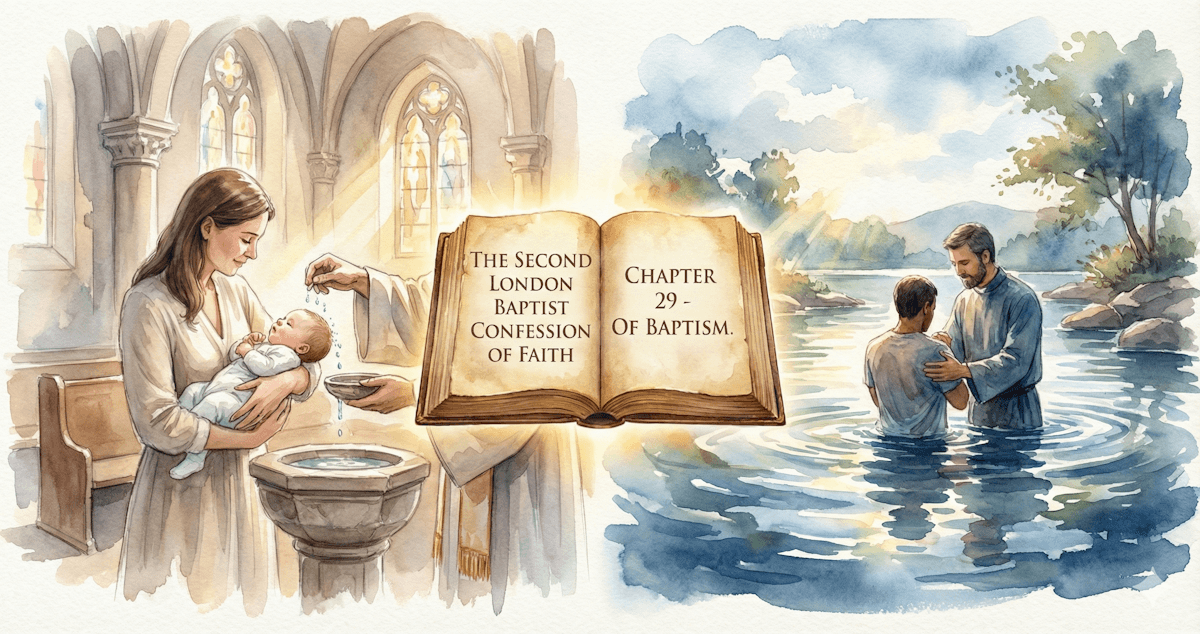
Between November 2024 and January 2025, Pastor Cameron Porter led Free Grace Baptist Church through a comprehensive study on baptism from Chapters 28 and 29 of the Second London Confession of Faith (1689). These four sessions explain why Reformed Baptists practice credobaptism (believer’s baptism) rather than infant baptism.
A Word to Our Readers
If you’re firmly convinced of Paedobaptism, genuinely wrestling with questions, or new to this conversation—welcome.
Paedobaptists don’t all hold identical positions. The theological reasoning varies (presumptive regeneration, covenant membership, sacramental grace). Our responses engage covenant-based arguments from Reformed confessions.
We share vast theological convictions with Presbyterian, Dutch Reformed, and Congregationalist brethren. Where we differ on covenant theology and baptism, we express those differences firmly but charitably.
What You’ll Find
Four sessions: (1) What ordinances are, (2-3) Five theological arguments for credobaptism, (4) Responses to Paedobaptist arguments and Q&A.
Each session draws from Scripture and Reformed theologians—including Paedobaptists (like John Owen) whose covenant theology points toward the Baptist position.
Session 1: The Foundation – Baptism and the Lord’s Supper (November 24, 2024)
We began with Chapter 28. Before understanding who should be baptized, we need to understand what the ordinances are.
The particular Baptists were deliberate in their wording:
- “Ordinance”: emphasizing baptism is a commanded ordinance to be obeyed only by those who can obey (those regenerated and given faith).
- Excluded “seal”: the seal of the covenant is “the indwelling of the Spirit,” not water. (This differed from Westminster and Belgic Confessions calling sacraments “signs and seals.”)
- “Positive”: baptism is a divine command given by revelation.
The ordinances are “living symbols which the Lord has consecrated” (Calvin): channels whereby Christ nourishes us.
Session 2: The Theology of Reformed Credobaptism, Part 1 (December 8, 2024)
Now we moved into Chapter 29. The central question: who are the proper subjects of baptism?
The particular Baptists understood this question is necessarily preceded by another: who are the members of the covenant of grace? This is the key that unlocks the baptism debate.
The Argument from Covenant Theology
Key texts: Genesis 17:7-14, Jeremiah 31:31-34, Hebrews 8:6-13, Romans 9:6-8
The covenants differ in both substance and administration. The old covenant was conditional (blessings and cursings); the new covenant is unconditional, ratified by Christ.
The Argument from Federal Headship
Key texts: Romans 5:12-21, 1 Corinthians 15:21-22, 45-49
All humanity is represented by Adam or Christ. We baptize only those represented by Christ as their federal head—believers brought from death to life.
Session 3: The Theology of Reformed Credobaptism, Part 2 (December 22, 2024)
We continued building the biblical case with three more arguments for credobaptism.
The Argument from the Doctrine of Salvation
Key texts: Romans 6:3-11, Colossians 2:11-12, Galatians 3:26-27
Baptism signifies union with Christ in death, burial, and resurrection. Only those truly united to Christ should receive its sign.
The Argument from the Clarity of New Covenant Revelation
Key texts: Hebrews 8:6, 10:1, John 1:17, 2 Corinthians 3:7-18
The new covenant is clearer than the old. Shadows have given way to substance. We baptize based on Christ’s accomplished work, not shadows.
The Argument from the Doctrine of Worship
Key texts: Matthew 28:18-20, Acts 2:38-41, 8:12, 8:36-38, 16:14-15, 16:30-33
The regulative principle: God prescribes worship. The New Testament pattern is consistent—belief, then baptism. Christ commanded: “make disciples…baptizing them.”
Session 4: Addressing Paedobaptist Arguments (January 5, 2025)
Our final session engaged primary biblical arguments for infant baptism. Not all Paedobaptists make identical arguments (Westminster, Dutch Reformed, and Anglican traditions emphasize different aspects). These responses address covenant-based arguments from Reformed confessions.
Six main arguments:
The Abrahamic Promise and Covenant of Circumcision
Key texts: Genesis 17:1-14, Galatians 3:16, Romans 4:11-12
Response: Circumcision was connected to Abraham’s physical descendants and Israel, not the covenant of grace.
The Inclusion of Children in the Covenant Community
Key texts: Acts 2:39, 1 Corinthians 7:14
Response: The old covenant included mixed multitudes by physical descent. The new includes only those in Christ by faith.
The Transition from Circumcision to Baptism
Key texts: Colossians 2:11-12
Response: They signify different realities. Circumcision pointed forward; baptism signifies present union with Christ.
Christ Welcoming Little Children
Key texts: Matthew 19:13-15, Mark 10:13-16, Luke 18:15-17
Response: Jesus demonstrated kingdom character, not baptism. He blessed the children but didn’t baptize them.
Household Baptisms
Key texts: Acts 16:14-15, 16:30-34, 1 Corinthians 1:16
Response: These accounts show consistent pattern: hearing, believing, baptizing. The jailer’s household “rejoiced and believed.”
Additional Arguments Addressed
The session addressed other arguments, demonstrating the Baptist position is comprehensive biblical understanding.
Key Takeaways
After these four sessions, several core convictions emerge:
- Baptism signifies spiritual realities only believers possess: union with Christ, forgiveness, death to sin, resurrection to new life.
- The new covenant differs substantially from the old—spiritual not physical, eternal not temporal, effectual not conditional.
- Only new covenant members should receive its sign. Membership is determined by faith in Christ, not physical descent.
- The proper mode is immersion, reflecting burial and resurrection with Christ.
- This flows from our understanding of salvation, covenant theology, the church, and the regulative principle of worship.
- We can differ charitably with Paedobaptist brothers and sisters (Presbyterian, Dutch Reformed, Anglican, Congregationalist) while maintaining these convictions. Where we differ, we do so with mutual respect, recognizing sincere Christians hold varying positions.
Further Questions?
For specific baptism questions, see our Ask FGBC podcast:
- Why Should Only Believers Be Baptized?
- Is Pouring or Sprinkling Sufficient for Baptism?
- How Can I Explain Credobaptism to a Teenager Who Grew Up Paedobaptist?
Join Us
If you’re in the Chilliwack area, join us for our ongoing Confession of Faith studies every Sunday morning at 9:30am before worship. We alternate between prayer meetings and consecutive studies through the 1689 Confession.
If you have questions about baptism or are considering believer’s baptism, reach out to Pastor Butler. Whether seeking theological answers, interested in baptism preparation, or wanting to discuss further, we’re here to help.
A Word on Dialogue
We recognize sincere, Bible-believing Christians hold different convictions on baptism. The particular Baptists maintained “it is our duty and concern so far as possible for us, retaining a good conscience toward God, to seek a more entire agreement and reconciliation” with Paedobaptist brethren.
We share that commitment. If you disagree with the Baptist position, we respect that. If you have questions or want respectful dialogue, we welcome it. The church’s health advances not by avoiding difficult conversations, but by pursuing truth together with charity, humility, and mutual respect.
Free Grace Baptist Church is a confessional Reformed Baptist church in Chilliwack, BC, adhering to the 1689 London Baptist Confession of Faith. We exist to glorify God through expository preaching, doctrinal fidelity, and Christ-centered worship. Learn more at www.freegrace.ca